Thursday, February 14, 2013

Hot Stone Massage Therapy


Hot stone massage therapy is a type of massage that uses special stones, such as basalt, covered in massage oil that are heated to about 120 degrees Fahrenheit. The heat that is being released by the stones, once placed on the body, helps in relaxing the inner muscles.

Hot stone massage is a form of therapy that is used for the relaxation of tensed muscles, enhancement of blood circulation and for stress relief.

River rocks are commonly used in hot stone massages as they have been naturally smoothed over time by the river current. The smooth surface of the stone will prevent damage to the skin. Basalt stones and many river rocks are high in iron content which retains the heat longer. The massage therapist stores their stones in fresh water and heats them up in an electrical heating appliance. Heated massage stones may also be transported in an insulated container if the therapist frequently to their clients place to perform the therapy.
Volcanic stones are also used in hot stone massage therapy due to their outstanding ability to maintain heat. This property of volcanic stones also sees them used in sauna baths and in some water purifiers. These stones are generally smooth which is great to use in a hot stone massage therapy. As with other types of stones used in hot stone massage therapy, the therapists are extra careful of these stones as they may become too hot if left unattended.
Massage oils are also important in a hot stone massage therapy and the most commonly used are grape seed, olive, lavender and rose oils. Oils are used to lubricate the kneading and rubbing techniques. The scents of essential oils are important in the enhancement of the result of the therapy.

The hot stone massage therapy is also effective in flushing out excess toxin from your body. It has been a popular aid in treating several different types of diseases and disorders, like:

  • Chronic muscle pains
  • Anxiety, depression and stress
  • Back pain, lower back pain, constant muscle cramps
  • Fibromyalgia
  • Sleep disorder
  • Arthritis
Whilst hot stone massage is for stress relief, it still has its limitations. It is not offered or suitable for everyone, specifically to hypertensive people. People who have high blood pressure should not go through a hot stone massage as the heated stones may affect their blood pressure.

So if in doubt, be sure to advise your massage therapist of any medical conditions before undertaking hot stone massage therapy.

_________________________________________________________________________________
We invite you to visit:  http://stevenswood.com/spa/spa-menu/ for a listing of spa treatments, including our Aroma-Stone Therapy Massage performed in our Indigo Eco-Spa

Posted by:  Connie, Stevenswood Spa Director
February 14, 2013


When Hot Stone Massage Therapy Should Be Carefully Considered

Hot Stone Massage TherapyHot stone massage therapy is a great way to relieve stress. It is a natural and a very effective aid to release muscle tension and even emotional anxiety. Stress does not only drain you mentally and emotionally, it is also the source of physical pain.
Parts of your body may not seem to be have their full range of movement when they are stressed in your daily activities. The hot stone massage can treat that, after a good session of this type of massage therapy you may be able to get back to your normal life without stress and muscular or skeletal discomfort.
Many wellness clinics today offer various types of massage. Most of them focus on muscle and bone stimulation to relax and de-stress each part of the body.
Many massage clients gain complete recuperation from stress and body aches from a well performed hot massage therapy which uses therapeutic stones such as basalt, marble, or chakra. However, you need to carefully consider getting a hot stone massage if you feel are concerned about it’s effects on your body.

There are some body conditions that are not allowed in a hot stone massage therapy session, specifically hypertension.

The therapist will put hot stones on your body wherein body temperature will increase and if you have a high blood pressure trigging a high body temperature is not recommended.

You should be cautious in availing hot stone massage therapy when you have:

Hypertension. When your blood pressure is high, a hot stone massage session is not recommended to you. People with hypertension may not benefit from this style of massage session and may even be a detriment their health. Blood pressure may rise as body temperature does and putting a hot stones on your body will trigger a higher than normal body temperature.
Skin Conditions. You may need a doctor’s permission when you like to have a hot stone massage if you have a skin condition specifically if a skin inflammation.

The hot stones may trigger the inflammation and may worsen your skin condition. You need to treat your skin inflammation first when you want to have hot stone massage.

Pregnancy. You are not allowed to receive a stone massage when you are pregnant. During pregnancy, a hormone called relaxin is augmented as this helps shorten and soften the muscles in preparation for giving birth. The hot temperature and deep tissue stimulation during the massage lengthens these tissues, which makes it difficult for the pregnant woman’s body to prepare for birth.

_________________________________________________________________________________
We invite you to visit:  http://stevenswood.com/spa/spa-menu/ for a listing of spa treatments, including our Aroma-Stone Therapy Massage performed in our Indigo Eco-Spa

Posted by:  Connie, Stevenswood Spa Director
February 14, 2013


Friday, January 4, 2013

Regular Massage Can Address Aches and Pains Before they Happen

From: The Center, in Joliet
Everybody suffers from aches and pains now and again and for many these can become more troublesome during the cold winter months. Taking time to take care of your body can have multiple benefits for your overall health.
Eric Schiavi, a licensed massage therapist at The Center in Joliet said you should listen to your body.
“Consistency is prevention; if you have gotten relief from your pain through massage or bodywork, then you may consider that having regular massages may be helpful in preventing the buildup of stress and tension that leads to more acute pain,” he said.
Benefits of Massage and Bodywork
“Bodywork can help make really quick improvements as far as pain, mobility, stiffness and sense of well being,” Schiavi said. “Stress from a physical model makes people feel tight, compartmentalized, disconnected and like there's a lot of effort in their physical body and mental function.
"Massage alleviates these restrictions and allows better internal communication in the body."
To get the most out of any bodywork that you do receive it is a good idea to communicate your needs to your therapist as well as recognizing that all of your parts are connected and work together.  
“It’s a working partnership," Schiavi said. "When a client comes in and knows that they want to have their neck and shoulders worked on, I will definitely work where they want me to work, and then I will also show them how working on some other areas can produce an even greater effect because more of their body gets reeducated and relieved from tension and stress."
In addition to various forms of bodywork, there are many things that you can do on your own to alleviate bodily aches and pains.
“There are simple techniques such as self-massage of the temples while applying peppermint oil to help improve tension headaches. He added that contrast therapy, applying hot and cold alternately, to ease aches and pains in several areas of the body” said Schiavi.
Collectively, the staff of The Center has a wealth of experience in bodywork and how different modalities can be used together to bring maximum benefits to their clients creating a truly custom approach.
“We try to find out what types of therapy and which therapist will work best with each person; we can combine specific or general techniques and clients really enjoy the diversity that we offer,” Schiavi said.“People have finally come to the idea that massage isn’t just for making them feel better when they’re in a lot of pain, but it’s helping them to realize improvements above and beyond; it’s about maintaining a lifestyle and achieving what they want to achieve."

**********************************************************************************

Our guests at Stevenswood Resort & Spa enjoy the benefits of massage and skin care.  We invite you to visit Stevenswood.com for more details. 

Tuesday, November 20, 2012

Healthy means more than not being sick


From:  News-press.com
By:  Dr. Salvatore Lacagnina

Is healthy aging just the absence of disease? Certainly not!
Healthy aging allows a person to age in such a way that he/she is able to do all the things in life that makes one happy. That might be playing on the floor with the grandchildren or trekking up a steep mountain in North Carolina or walking for miles on a European vacation or being able to make love to your spouse. If one ages without disease, that is great but only if the individual is as functional as they would like to be. Healthy aging is about being functional and treating all chronic illnesses and diseases early and comprehensively.
Let’s think about when healthy aging begins. I believe it begins in childhood as we learn from our parents and those around us how to be healthy or not. If we see our family members eating fatty foods, sitting around watching hours of TV and not doing any exercise to stay fit and trim, then we will learn these behaviors and most likely emulate these as we get older.
Conversely, if we see our parents going out for a brisk walk in the evening, preparing healthy foods to eat and enjoy with the family, maintaining a near-normal weight and talking about other ways to stay healthy, we will most likely take on these characteristics and behave in a healthier way.
Healthy aging starts in childhood and progresses as we get older. Hopefully in elementary school and high school you learned about healthy nutrition and the importance of regular exercise. In college this education should progress even further.
I recently gave a talk at Florida Gulf Coast University to a group of students in the Civic Engagement class. This was a wonderful interactive discussion and it was obvious to me that these very intelligent young men and women were very knowledgeable about ways to stay healthy. They knew about the hazards of eating meats produced in the USA that are laced with pesticides, hormones, antibiotics and bacteria. They understood the importance of regular physical activity. We talked about stress management and the importance of quality sleep. These students inspired me to talk more about these topics and to continue to spread the word about health care reform, which starts with each and every one of us individually.
As we can see, the foundation for healthy living starts early and relies on healthy nutrition and regular exercise. Next we can discuss the importance of a wellness examination, screening tests and immunizations and how they affect healthy aging. A wellness exam is an assessment of one’s health at the present time and takes into account risk factors for chronic illnesses and cancers. The wellness exam should include a health risk assessment and a test to see how physically functional you are. At the Wellness Center in Cape Coral and Fort Myers many of the members take a test called a Body Age Assessment. This test gives a fitness age that compares to the person’s chronologic age. It is very motivating when you find out that your fitness age is years less than your chronologic age, and the converse is also true!
Screening blood tests can check for cardiovascular disease, diabetes and a host of other chronic illnesses as well as some cancers. Other useful tests include a colonoscopy to screen for colon cancer; mammograms to screen for breast cancer; Pap smears for cervical cancer; a prostate exam and blood test to look for signs of prostate cancer.
Immunizations are also a part of healthy aging. In the pediatric population, children get many immunizations over the course of their early years; and as we get older we need to rely on an annual flu shot, a pneumonia vaccine, shingles vaccine and now even a shot for whooping cough (pertussis) since this illness is on the rise.
Let us not forget about taking care of the mind as we get older. It is so important to learn and do different things daily to decrease the risk of dementia and there are many programs that you can do on the computer to keep the mind active and sharp.
Treating all the chronic illnesses (high blood pressure, diabetes, heart and vascular disease) and cancers early and comprehensively is most important to healthy aging. I discussed in my article from Nov. 1 how important it is to get comprehensive and coordinated health care when you have a chronic illness or a cancer. Also treating an acute illness early is important since we do not want things to get out of hand, as they say. There are many campaigns that promote the importance of calling 911 if you are experiencing chest pain or signs of a stroke. Minutes count when the heart or brain are in jeopardy. You can learn more about the signs and symptoms of a heart attack and a brain attack by reading more information on these topics on the American Heart Association website (heart.org).
In summary, healthy aging begins in childhood and if you focus on the recommendations listed above, you will undoubtedly live a longer, more productive and happier life. Begin today to take the best care of your body and brain and it will take care of you and allow you to live the life you dream about.
By:  Connie, Spa Director:  Visit Stevenswood.com:  promotes a healthy life style with amenities for our guests which include:  A fitness room with an infrared sauna, jacuzzi hot tubs, eco-friendly spa for massages and facials, nearby walking trails, and a Zagat rated restaurant – given top award/recognition.

Wednesday, October 31, 2012

Literally Standing Up at Work

From:  www.xeniumhr.com
By:      Mathew Simonton

With all the health and wellness trends out there, one that tends to be overlooked by many is simply standing. In addition the exercise ball, standing desks are peaking their way into the home and office. Why? The health benefits are immense.
Below is a snippet from a New York Times article expanding on the particulars of the body while sitting:
“Electrical activity in the muscles drops — ‘the muscles go as silent as those of a dead horse,’ … — leading to a cascade of harmful metabolic effects. Your calorie-burning rate immediately plunges to about one per minute, a third of what it would be if you got up and walked. Insulin effectiveness drops within a single day, and the risk of developing Type 2 diabetes rises. So does the risk of being obese. The enzymes responsible for breaking down lipids and triglycerides — for ‘vacuuming up fat out of the bloodstream,’ … — plunge, which in turn causes the levels of good (HDL) cholesterol to fall.”
A study by the American Cancer Society found that men who sat six or more hours a day had a 20% higher death rate than men who sat three or less hours a day. And for women? A 40% higher death rate.
There are a number of actions you can take a business leader to encourage a healthier workforce. Below are some suggestions by David Clemens of the HR Café.
  • Encourage employees to get up and walk around instead of always responding via email
  • Encourage employees to stand during a phone call or webinar
  • Encourage employees to stand during a meeting
  • Invest in adjustable or standing desks (note: transforming your desk into a standing desk can also be an easy and affordable DIY activity.)
Image courtesy of user Victor 1558 via Flickr Creative Commons.

Tuesday, October 23, 2012

Massage: More than a treat, a healing therapy for the body and soul

From:  VOXXI.com
By:       Amanda King

Do you think of getting a massage as a guilty indulgence? Maybe you get a gift certificate to the spa for mother’s day, and feel like you’re doing something naughty. The truth is, getting a massage is more than just a special treat. The Chinese have been using massage therapy as medicine for thousands of years, and recently, proponents of Western medicine are realizing that there is more to massage than we once thought. While everyone knows that getting a massage feels good, few are aware of the numerous associated health benefits.

Health benefits of massage therapy

Relaxation – probably the most commonly recognized health benefit of massage. Studies show that massage helps to relieve anxiety and stress. It lowers levels of cortisol, a hormone related to stress that can be responsible for an increase in blood sugar, suppression of the immune system, and weight gain. Massage has also been shown to increase neurotransmitters that reduce depression.
Back painStudies show that massage can relieve back pain and reduces the need for narcotic pain relievers by as much as 36 percent.
Headache – When you have a headache, the source of the pain usually originates in the muscles of the neck or shoulders and can be alleviated by massage. Massage has also been shown to reduce the frequency of migraines in sufferers.
Cancer – Massage can help to reduce problematic cancer symptoms, such as pain, stiffness, swelling, fatigue and nausea. It also helps to improve mood and quality of life for cancer sufferers, reducing depression and anxiety over the illness.
massge therapy Massage: More than a treat, a healing therapy for the body and soul
Massage can help to reduce problematic cancer symptoms, such as pain, stiffness, swelling, fatigue and nausea. It also helps to improve mood and quality of life for cancer sufferers, reducing depression and anxiety over the illness.
Blood pressure control – A study out of the University of South Florida followed people with high blood pressure, determining that hypertension patients who received massage therapy over a three week period showed significant improvements in blood pressure level.  This improvement is probably due to stimulation of the action of the vagus nerve, which is a nerve that connects directly to the brain and is responsible for regulating blood pressure.
Immunity boost – The hormone cortisol actually kills cells that are important for healthy immune function, which is why chronically stressed out people get sick more often than their relaxed peers. Massage reduces cortisol by as much as 50 percent, which can ward off colds and other illness.
Reduction of inflammation and osteoarthritis – A recent gene study confirmed that massage reduces inflammation and prompts growth of new mitochondria in skeletal muscle. Athletes have long testified to the feel-good properties of receiving a massage after strenuous activity, and now there is scientific evidence to give credence to their claims. Simon Melov, PhD, who was responsible for analyzing the samples from study participants said, “Our research showed that massage dampened the expression of inflammatory cytokines in the muscle cells and promoted biogenesis of mitochondria, which are the energy-producing units in the cells.” He also added that the pain relief experienced via massage was scientifically similar to using anti-inflammatory drugs.
massage Massage: More than a treat, a healing therapy for the body and soul
The research seems to favor all types of massage evenly, so no matter whether you’re treating yourself to a Swedish, Shiatsu or deep tissue massage, you’re sure to reap countless health benefits and help yourself on your way to a happier, more relaxed and pain free life. (Shutterstock photos)
Infants can benefit from massage, too. Adults aren’t the only people who find relief at the hands of a masseuse. Infant massage can help your baby sleep better, reduce fussiness and alleviate colic and constipation. Like in adults, it also can boost a baby’s immunity, keeping them from getting sick at an important juncture in development. Tiffany Field, PhD and director of the Touch Research Institute at the University of Miami School of Medicine explained in Parents Magazine, “When you give your baby a massage, you’re actually stimulating her central nervous system. It makes her brain produce more serotonin, a feel good chemical, and less cortisol…. As a result, your baby’s heart rate and breathing slow down, and she becomes more relaxed. “
The research seems to favor all types of massage evenly, so no matter whether you’re treating yourself to a Swedish, Shiatsu or deep tissue massage, you’re sure to reap countless health benefits and help yourself on your way to a happier, more relaxed and pain free life. You also now have several reasons to incorporate massage into your life on a basis more regular than every mother’s day!
 

Visit:  http://stevenswood.com/spa/spa-menu/ for a list of Stevenswood's massage treatments - performed by certified massage therapists, available seven days a week, year round, appointments available: phone 1-800-421-2810

Saturday, August 18, 2012

Optimum Nutrition for the Aging Brain

by:  Michael Colgan, Ph.D.   from:  CSackman.isagenix.com

For the first time in history, over 1,000 scientists in the 130 universities involved in the Human Brain Project, have accurately counted the neurons in the brain. It is much, much higher than we thought, at least 89 billion neurons. It shows why even the best super-computers, such as IBM’s Deep Blue chess-playing computer, which is equivalent to about 200 million brain cells, still have less than one-millionth the power of the human brain.

With such a magnificent machine operating every single activity of your mind and body, it makes good sense to nurture it every day. Yet most of us seem to take our brain for granted, and take less care of it than we do of our teeth. Not a wise strategy because, during aging, the adult brain suffers changes that impair cognition, caused primarily by oxidative stress and chronic inflammation. Recent controlled research on people aged 35 and above, documents progressive declines in memory, learning, attention, and decision making. Balance and motor movement also decline.

These findings from recent research are so strong that, in April 2011, the US National Institutes of Health made its first revision in 27 years to the criteria for cognitive impairment, stating that it is not a condition that occurs only in the elderly, but is a progressive decline of brain function that begins decades before it shows. Official intervention has now changed its focus to optimizing health lifelong.

Brain Imaging Links Cell Loss to Cognitive Decline
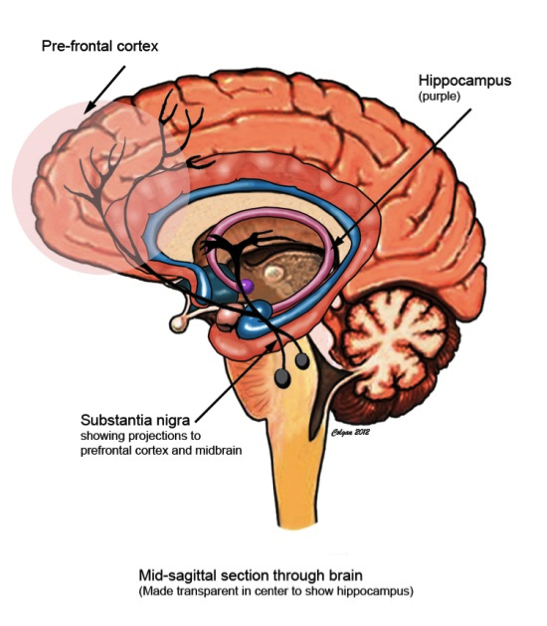
Functional magnetic resonance imaging (fMRI) of the human brain confirms cell losses in discrete areas of the brain (illustrated above) that accompany specific cognitive impairments. Especially relevant are cell losses in the prefrontal cortex, a crucial area for attention, decision making, and working memory. New research shows that the integrity of the pre-frontal cortex is highly dependent on its neurochemical environment, especially its nutrition and oxygenation.

Linked to the prefrontal cortex by multiple networks of neurons is the hippocampus, whose neurons produce the neurotransmitter acetylcholine, essential for the formation of new memories.  Neurotransmitters are chemicals made in the neurons that transfer information from neuron to neuron.  When cells that produce a particular neurotransmitter die, the neurotransmitter flow declines, and the flow of information ceases. As acetylcholine declines with aging, formation of new memories becomes progressively more difficult.
Also linked to the prefrontal cortex, and to the motor cortex behind it, is the substantia nigra (black body), whose neurons produce the neurotransmitter dopamine, critical for attention, decision making, working memory, balance, and motor movement. Loss of dopamine cells with aging results in declines in all these cognitive functions.

Optimizing Brain Nutrition
In collaboration with Isagenix scientists, my research has focussed on brain nutrition.  We reviewed more than 1,000 recent animal studies and human clinical trials that have identified a number of individual nutrients that support different parts of brain function. A few of these trials have found combinations of nutrients that work synergistically.  That is, combining the nutrients multiplies their power to support brain function beyond the use of individual nutrients alone.

Unlike other companies, who have focussed on one or two individual nutrients to support one or two brain functions, we have sought the best synergistic combinations.  From the most significant research we have devised synergistic combinations of eight nutrients to provide potent and wide ranging support of the multiple brain structures and functions discussed above.

We have completed 60-day pilot clinical trials on normal human subjects with the best three formulations we could devise.  Using standardized tests of mental focus, concentration, decision making, and memory, all three trials showed positive effects.  One formulation proved slightly better, and we selected that as the basis of the new Isagenix Brain Support. It is designed to provide optimum brain nutrition.  It is also specifically designed to complement IsaLean Shakes, Ageless Essentials with Product B, and the new Isagenix Sleep Support. There is no other product comparable to Isagenix Brain Support available anywhere.

About Dr. Colgan
Dr. Michael Colgan is a world-renowned research scientist, leading expert in the inhibition of aging, and a member of the Isagenix Science Advisory Board. Dr. Colgan has provided nutrition, training and anti-aging programs to more than 11,000 athletes, including many Olympians. He is director of his eponymous Colgan Institute, a consulting, educational and research facility concerned with the effects of nutrition and exercise on athletic performance, along with prevention of chronic degenerative disease, and prevention of degeneration of the brain.
To read more articles by Dr. Colgan, click on one of the following links: